This is a blog about me and the things that make me laugh, smile, hurt or cry!

Friday, April 18, 2014

Review of Patchwork by Ellen Banda-Aaku

My review of Patchwork by Ellen Banda-Aaku was first published in the Bulletin & Record magazine in March 2013. I first read it for the Lusaka Book Club in March of 2012. Later that year in September 2012, our Book Club had the privilege of hosting Ms Banda-Aaku for dinner and a chat. Since I had already read the book and discussed it in the club, I asked the author questions based on my own initial impressions of the book and what we shared in the book club. When I wrote my review several months later, I opted to stick to my original review, 'untainted' by my meeting with the author.

I have finally gotten round to uploading the review on my blog and as such will include all the questions and answers with the author in so far as I can remember them.

Before I get to the published review, I must say that what I am posting below is my review as I sent it for publication. Astute readers will be able to guess which paragraph was censored from publication. Why do I use the word censored instead of edited? Subsequent reviews published in the magazine were edited as is the right of the publisher/editor to do so. But in my view, this particular review was censored -- as I expected it would be. However, I sent them the whole thing anyway, even though I knew they would cut that part out. I won't say which paragraph it was, but I will come back to it later because I asked Ellen Banda-Aaku about it when I met her.

Source

Patchwork by Ellen Banda-Aaku

Reviewed by Masuka Mutenda


For anyone who is an avid reader, one of the greatest pleasures of a really good book is when you have the privilege of entering into a world which is widely different from your own and yet cosily familiar. If a book has wonderful characters and a great story, then it doesn’t matter if it is set in Iceland in the 1800s. That being said, its really nice when you come across a book that you could almost have written yourself and which seems to be about you, your own family or friends and neighbours. This is how I felt about Patchwork.

Set in Lusaka in the 1970s and 80s, I could relate to everything. From the names of people, the games children played, to the description of the home life at the block of flats where our 9-year-old protagonist Pumpkin, lives with her mother. The book starts off somewhere in Lusaka in 1978, during the time of curfews and threats of bombing by Rhodesian forces. It was a long time ago, but many things are still the same: the rivalries and jealousies of children; the prying eyes and intrusiveness of neighbours at a block of flats; that a man can have a girlfriend on the side, but to the child of that relationship, all the clothes and toys and school fees in the world won’t make up for not having a real Daddy; that regardless of what you see or think you perceive, you can never really know what a person is really feeling or experiencing because you don’t have their life. Patchwork explores these and many other issues.

Banda-Aaku is at her most powerful when writing through the eyes of the young girl who struggles to explain to her friends why her father doesn’t live with them.  JS, Pumpkin’s father is a wealthy self-made businessman who lives with his wife Mama T and their five sons out on a farm somewhere. Through a series of events, Pumpkin ends up living with her father and his ‘other family’ and suffers the usual hardships of an evil stepmother. The book is full of colourful characters such as Pumpkin’s grandmother who runs a tavern; baDodo, Mwanza and Uncle Oscar, neighbours at Tudu Court; Bana Bee, the caretaker’s wife and Pumpkin’s young friends, Bee and Daisy; Sissy, the housekeeper at Tata’s farm and Pumpkin’s only ally. Then there is Zu, Sissy’s husband; Driver; Tembo, Pumpkin’s husband and Salome, a mysterious girl who circumstances thrust into Pumpkin’s life.

One of the traps some writers fall into is creating characters that are morally perfect. Thankfully, Ellen Banda-Aaku has not subscribed to this school of thought. My reaction to the characters in Patchwork, their circumstances and the decisions that they made was much like what I felt when I read VS Naipaul’s ‘A Bend in the River’. Patchwork is full of flawed characters that are difficult to root for. They are faced with difficult decisions that we as the audience may not necessarily agree with, but can definitely relate to. In fact, in Pumpkin, Banda-Aaku has succeeded in crafting a character who is thoroughly detestable and who many will struggle to sympathise with, understand or even like. A lot of what Pumpkin does just doesn’t make sense. But then, isn’t this the case in real life also? There is very little that is black and white in Patchwork, and that is a good thing.

In the last third of the book, we suddenly skip forward 13 years to an adult Pumpkin, married and with children of her own. This jump is quite jarring and to be honest, the voice of Pumpkin at 32 is not as authentic as Pumpkin at aged 9. Perhaps it’s because we skipped a decade, or maybe the author just has more insight into the younger characters. Either way, this last part of the book does shed some light on how our childhood experiences influence our adult lives. In spite of the evidence before us, we make decisions from the perspective of what we saw and experienced as children. This perspective is not always for the better. Being able to acknowledge this and move on is part of growing up and becoming mature. Recollecting some events of the past in Pumpkin’s life that she is forced to revisit as an adult, we appreciate once again that not everything in life is black and white. For example, after an encounter with Mama T, the adult Pumpkin asks herself how she would react if her husband Tembo suddenly brought home a 9-year-old girl and introduced her as his daughter and expected her to take care of her. Pumpkin wonders if she would treat such a child any differently from how Mama T treated her.

One of the themes that pleasantly surprised me in Patchwork was how the issue of tribalism is tackled. I have often had conversations with people who are very quick to dismiss tribalism, tribal discrimination and prejudice as something that doesn’t exist in Zambia. They think tribalism only refers to giving jobs to people from the same clan as you. Of course, people from a dominant tribe are often the ones to express such sentiments. Only someone who has experienced racism, classism, or the caste system can fully appreciate the struggles experienced by ethnic minorities. I have had similar conversations with people from Malawi, South Africa and other countries about this problem. JS or Tata, Pumpkin’s father is Luvale, and so am I. Pumpkin’s real name Pezo and that of her daughter, Mufuka are names shared by two of my first cousins. Tribal discrimination and prejudice is an issue that is so often swept under the carpet by our government and many in society that I was frankly stunned to see it written about so well in a work of fiction.  It is not one of the main themes, but it is an underlying thread in some of the situations that Tata and his family experience. As a Luvale woman who can share stories from friends and relatives of the prejudice and discrimination experienced in Zambia in 2013, I appreciated that tribalism in this vein was acknowledged, but not made the central theme. Sometimes, to be acknowledged is enough and is ultimately more effective.

In traditional African African story telling, the voice of moral authority, the take-home lesson and the resolution of the story and characters are strong themes. I think that this is why Nollywood films resonate so much with African masses. The characters are largely one-dimensional and the bad guys always get their just desserts. For this reason, some people just won’t like Patchwork because the author doesn’t tell us what happens to everyone, we cannot be sure that some of the characters have learned their lesson or will end up alright. Even though I love a story with resolution (not necessarily everything working out for the good), in Patchwork, the author did justice to her characters and her audience by keeping it real.

--------------------------------

I have had the privilege of coordinating the Lusaka Book Club for almost 8 years now and we have read books written by authors from all over the world including all over Africa. In this time however, no one ever chose a book by a Zambian author. Does this mean that Zambians don’t write books? Certainly not! It simply means that each member gets to choose a book for the club to read that fits under the literary fiction umbrella. For serious readers, an author doesn’t get any points merely for being Zambian. A good book should stand up on its own merit. So when somebody chose Patchwork, the book club members were excited that a book by a Zambian author that was worth reading, comparatively speaking, had come along. After reading it, we were even more pleased that Ellen Banda-Aaku’s work stood toe-to-toe with other books we had read by contemporary African writers such as Chimamanda Ngozie Adichie. However it is still sad to note that Patchwork only came to our attention because it won accolades elsewhere – the 2010 Penguin Prize for African Writing. A prophet is never appreciated in his own town and it seems, neither are authors. I look forward to the day when we validate our own literary works in Zambia and do not need approval (in form of awards) from others.

###ENDS###

Ellen Banda-Aaku -- a lovely person. It was a great pleasure to meet her
The book club member who selected Patchwork was friends with Ellen Banda-Aaku's cousin, who was gracious enough to attend the original book club discussion to shed some light on the author and give us some background to the book. Through her I was able to get in touch with Ms Banda-Aaku with a view to doing an email or Skype interview. This didn't work out very well, but she did mention she would be coming to Zambia at some point and would love to meet with me and other book club members to talk about the book. The meeting happened over dinner on 7th September 2012 at the Bombay Lounge restaurant at Levy Mall. I was saddened and stunned that since publishing the book, she had never actually had an opportunity to meet and talk over it with Zambian readers (not the same as friends, family or media interviews). Up until my article several months later, the book had also never been reviewed in a Zambian publication.

Ms Banda-Aaku patiently listened to and answered ALL of our questions
One of the things which didn't sit well with me and which I thought was fake and contrived in the book was the passage where the title of he book, Patchwork comes from. In the book, Sissy the housekeeper warns Pumpkin about the danger of lies and how one lie on top of another becomes a patchwork that in the end cannot be mended because too many patches have been sewed on top of the original lie. It turns out that this was real conversation between the author and her aunt and is the only passage in the book which is directly from real life. Huh? Go figure! I conceded that if it had come from anyone other than Sissy, I might have believed it. Sorry, but it sounded too sophisticated an analysis coming from the maid.

Listening intently
So what about Tata and Grandma Ponga? What was going on there? Did they have a thing? No. There wasn't anything going on between them, there was no history or relationship. Really? Because Grandma Ponga's hatred of Tata was too much. As you can see, we wanted there to be something more, but she insisted there wasn't. We settled on the fact that Grandma Ponga recognised the kind of man that Tata was and the destructive path her daughter was on by falling for him and wanted to spare her that.

The Lusaka Book Club with author Ellen Banda-Aaku
Two other issues that we discussed were adult Pumpkin's frequent visits to the witch doctor and how common a phenomena it is that many rich and educated people do this, but unlike in other parts of Africa, in very Christian Zambia one would die rather than admit to it. The denial in the face of HIV and AIDS that afflicted Pumpkin's mum is another issue. It was subtle, but not obvious and in your face. This is exactly the experience that many of us have had in our families where people refuse to accept the truth staring them in the face.

The other was how in one sentence she snuck in that Pumpkin's favourite cousin (I forget his name), who went to the US for school and settled there and is hugely successful but never spoken of because he is gay. No one admits to it when one of their kids ends up doing what must not be named. She mentioned that she put that in there and didn't make a big deal of it but just to acknowledge how common this is among Zambian families with children who settle abroad but never come back. Ever. This is one of the reasons why.

Me and Ellen -- yeah, coz that's how we roll!
On to the tribalism aspect. Banda-Aaku comes from a Bemba/Eastern background and has no links to Northwestern Province or the Luvale people at all. How and why then did she tackle a subject which is so rarely acknowledged in our society? This is precisely why she decided to write about it. She said that she never understood why there was so much stigma and discrimination toward the Luvale people nor why no one ever spoke about it, even thought it was so real. I thanked her for bringing this out because it meant so much to me. This is the 21st century and I can name people that I personally know whose relationships were broken up or attempted to break them by parents, aunts, uncles and church members because they didn't approve of their son/daughter or niece/nephew marrying a Luvale. We are not talking ten years ago, we are talking three or four. It is mentioned in the book and I can categorically say it now that I don't think Zambia can ever elect a Luvale president for this very reason. Well, people said that about Barack Obama so perhaps I will be the first? LOL

Ellen Banda-Aaku signs my personal copy
All in all, it was a wonderful discussion and a great pleasure to meet with the author of a book that I had enjoyed so much. That reminds me to order her children's books to read to my niece and nephew.

Of Cars and Food and Hunger

Source

What has brought me back to this erstwhile neglected blog? A series of random thoughts which were too long for a Facebook status update.

They say you shouldn't shop when you're hungry, because you will inevitably buy crap and unhealthy food. One of my resolutions is not to eat in my car, because doing so means that I am hungry and can't wait to sit down at a table and eat. I only break it when I am really hungry. But the reason I created this rule for myself was because of two incidents that happened when I was weak from hunger and ended up eating in my car:

Source

Number one happened one Saturday afternoon after some activity that I cannot recall. I had a hundred and one things to do and by 3pm, I still had not eaten. I grabbed a pie from the supermarket and rushed to my car. I was late for my next appointment, but I was famished. The pie was on the passenger seat, calling my name. I pulled out of the shopping centre and into the main road. And because there was quite a bit of traffic, decided to take advantage and eat as quickly as I could in the car. I was so hungry, I ate that pie in about three large bites. This was between Arcades Shopping Centre and Manda Hill Mall. If you have been to Lusaka, you will know that this is a very short distance of a couple of hundred metres. By the time I reached the Manda Hill traffic lights, the pie was consumed. Satisfied, I looked around to notice two guys in the lane next to mine who had been neck and neck with me and my car the whole way from Arcades and had witnessed my triple-bite face-stuffing. To make sure I knew that they knew what I had just done, they both leaned over, shook their heads and mouthed, "No way!” 

Tjo! It was bad. It was, "earth, open up and swallow me whole now” type of embarrassing.

The second happened a few months ago. I was parked in front of a shopping centre waiting to meet a friend. I had bought a couple of shawarmas and a drink. I received a text message, "delayed". It was almost 5pm and I had not eaten anything since mid morning. I decided to quickly eat my shawarma, again, in the car.

Half way through eating (this time I took slightly smaller bites, although still large), I noticed a guy standing directly in front of me and looking straight at me. From where I was parked, I guessed he was Congolese (DRC) because of the bleached skin (dunno why our friends up north love unnatural yellow skin). Anyhoo, Mr Congo in an extremely tight muscle shirt, proceeded to saunter toward my car. What followed was the worst pick up line I have ever heard in my life (as in, spoken to me directly). 


“I like the way you eat”, he said. After ten minutes of his pleading for my name and number so that we could become friends, my appointment finally arrived and rescued me from Mr Congo Muscles. It turns out he was from DRC and was hoping to stay longer if he made some good friends. *eyes roll*. With the queues at the US Embassy and scores of others trying ti make it to South Africa, we forget that a Zambian green card (because an NRC actually is green - lol), is still making it for some people.

Source
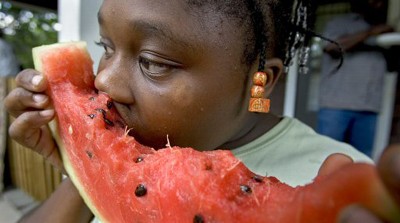
So what is the moral of the story? As you can see from the pictures, there is no elegant way to eat when you are hungry. There just isn't. And that is why in Africa, it is considered very rude to disturb someone while they are eating, and even more so to photograph them.

.

Monday, November 11, 2013

God Bless America... I mean Zambia!


I took this picture in June 2011 at the Iwo Jima Memorial
(officially known as The Marine Corp War Memorial)
just outside the Arlington National Cemetery in Arlington, Virginia.
This sculpture is massive and took several years to complete.

Two years ago, as we always do, the world and his dog followed the election in the United States closely. One of the things that fascinates me about America is that they seem overly enamoured with themselves, election or none. While it is shocking to observe how much they hate each other politically and that the health of the economy and welfare of human beings is inconsequential to one’s party coming out on top, in one thing, they are steadfastly united: they believe in the idea of America. They may disagree on how this ideal should be applied in different areas, and boy oh boy do they disagree, but they love their country. A good example is to observe the behaviour of Zambians versus Americans when they are at a function and hear the familiar tune of their national anthem. This is how Zambians react - with indifference. It is tedious to have to sing it and usually a child or school choir or lone muggins is given the chore of singing the national anthem while the rest of us a quarter-heartedly (half-heartedly is too generous) mumble a phrase or two. Contrast this with our friends across the Atlantic. I attended a ceremony a few years ago and witnessed the American colleagues singing the their national anthem while bursting with pride, standing ramrod straight and with their hands on their hearts because they meant it.

"My Country Tis of Thee..."

I know a lady that was invited to attend the dedication of the ‘new’ US Embassy building in 2011. She came back bemused that the dedicating prayer took 45 minutes. Forty-five Minutes to pray over a building. Why? Because it is not just a building to them, it is a small part of their nation right here in Lusaka. Last year or whenever it was that Whitney Houston died (my apologies to the fans), a lot was said about her performance of the national anthem at the 1992 Superbowl. I watched the video and then I decided to read the words of the national anthem. I felt that I kind of understood something about what they were going through. The song or poem or hymn is about the flag – the star spangled banner. It is about what it represents. It talks about the fact that in the morning after the bombs had burst throughout the night, he looks for the flag and it is still there as a symbol of hope.

Barack's Crib, aka The White House


So is this only an American thing? No. I have an Aunt married to a Tanzanian. Over Christmas she visited with my cousins. The youngest about two years old, was always singing a song whose main lyrics were Tanzania over and over. I asked my aunt if this was the national anthem and she said no. It is a patriotic song that is taught in pre-schools. Now I am not saying that this automatically makes people care about their country, but have you noticed how countries that systematically indoctrinate their citizens behave toward their country and the idea of their nation? Anyone who has studied in China or Japan or Cuba can attest to this. Similarly, anyone with friends or relatives with children in the US will tell you how disconcerting the indoctrination is, it begins at pre-school. How many people in Zambia can recite the US Declaration of Independence just because you have heard it countless times in movies and TV shows? You probably don’t even realise that you know the words.


This thing is huge!

Read what prompted this reflection on 'Amrika' here.

Honouring Our Heroes - the Fallen and Living

The National War Memorial in Lusaka

Today, the 11th Day of November is what the UK and Commonwealth nations call Remembrance Day (formerly Armistice Day). All week leading up to this people wear red poppies to remember those who gave their lives in military service. Americans call today Veteran’s Day. In America, Remembrance Day is actually commemorated on Memorial Day (in May) which is for those who died while serving, whereas Veterans Day is about appreciating the service of all military personnel, not just those who died. On the Internet, on Twitter and on Facebook, we have been inundated with gratitude directed toward US men and women in uniform being thanked for their service to their country and to protecting its freedoms. Many people will share the reaction of seeing how men and women in uniform are greeted in the US. People stop to shake their hands and to thank them for their service. It is quite remarkable to behold. Now to those of us well aware that many of these military incursions are not motivated by the greater good but control of oil and other resources it may seem baffling that they are so highly regarded. But I think I get it and I admire it.

The Arlington National Cemetery in Arlington, Virginia - USA

'Our nation's most sacred site' - Arlington National Cemetery 

Veterans and freedom fighters do not get half the recognition that they deserve. My own grandfather fought in the Second World War in Fiji. Like many other young and bewildered Africans, he was carted off to a distant land to wage war in a battle he had absolutely no clue about and then was barely recognised for his service. The struggle for our independence is one that many of us now take for granted. Hindsight is 20/20 and we are fond of applying today’s insights and broad view to events of yesteryear. I think this is unfair because people did what they had to do at that time and so while independence didn’t work out all roses in the end, the sacrifices of those who gave their lives to wrest control of our country from foreign invaders should not be dismissed. These feelings came as a result of witnessing this reverence for military veterans on a visit to Washington DC a few years ago. I was fascinated by the memorials and cemeteries and general solemn acknowledgment of and gratitude toward those who put themselves forward for military service and more so for those who sadly perished. Once back home, the inevitable contrast ensued. That year (2010 or 2011), I watched the November 11th commemorations opposite Cabinet Office with interest. How many people know that pillar or whatever across from Cabinet Office is a war memorial? Visit the Ex-Servicemen's League of Zambia on Facebook to find out more.

The tomb of the 'Unknown American Soldier'. A comfort to families of those whose
bodies were never found or recovered.

The sacrifices of the past are one thing, but our attitude toward our current military is very different from that in the United States. I think there are a number of reasons for this. The military in Zambia are heavily subsidised and generally given a free ride in almost everything, resulting in a sense of entitlement that manifests itself in persistent bad behaviour and indiscipline (if peace keeping reports are to be believed). Add to that the fact that (apart from officer level), it is the less educated and not so academically gifted who often found their way into military ranks and you have an inferiority complex armed with a gun in an environment where civil liberties are restricted. Our attitude toward the military is not pride or gratitude but fear. This is unfortunate because by God’s grace we have so far survived without outright military conflict. Yes the army are deployed to support the ruling party and control large crowds, but that is about all they do. The recent terror attacks in Kenya’s Westlands Mall show that even peace loving nations are vulnerable. The enemy comes in many guises these days. I doubt if as a country we have the first clue of what to do or how to react were something like that to occur here (God forbid). The 2012 Afcon victory celebrations and 2011 Presidential inauguration are two recent examples of just how poor planners we are and underscore the woeful inadequacy of our preparations.

There are always dozens of tourists arriving to pay their respects every minute

But being in a military or law enforcement job means that it is not like being a teacher. Nursing and teaching are both noble professions and those who hold such positions make many sacrifices, but rarely would they be called upon to sacrifice their own lives for the good of others. Of course, even in America you often hear complaints that once their tour is over, veterans are just dumped back home without the proper support needed to re-integrate into society and make a meaningful life for them. No longer in uniform, the gratitude dries up and remains empty words. Because I have American friends whose children and loved ones are fighting in Afghanistan and other places, I have developed a deeper respect for what families go through waiting for a son or daughter to return safely. All the while worrying that should they come back alive, how different will they be.

JFK's memorial. Contrast this dignified memorial with the ostentatious one
for the late President Chiluba

So on this Remembrance Day, my thoughts turn to our fallen men and women. I remember my grandfather and his friends, but I can’t think of anyone beyond those long departed veterans. I don’t know whether or not to call them heroes because I don’t really know anything about how or why they died or even who they are. We commemorate Remembrance Day because it was instituted after WWI and we were part of the 'British Empire', so had to commemorate it too. And yet it didn’t really have much significance or relevance for us as being young nations, our Independence is what meant more to us and still does. So in this regard, Independence Day is much easier because I know, understand and am grateful for the sacrifice of our Freedom Fighters.

But still, I remember...

Courtesy of Facebook


p.s. These pictures were all taken by the author. Please email to ask before you use them.